
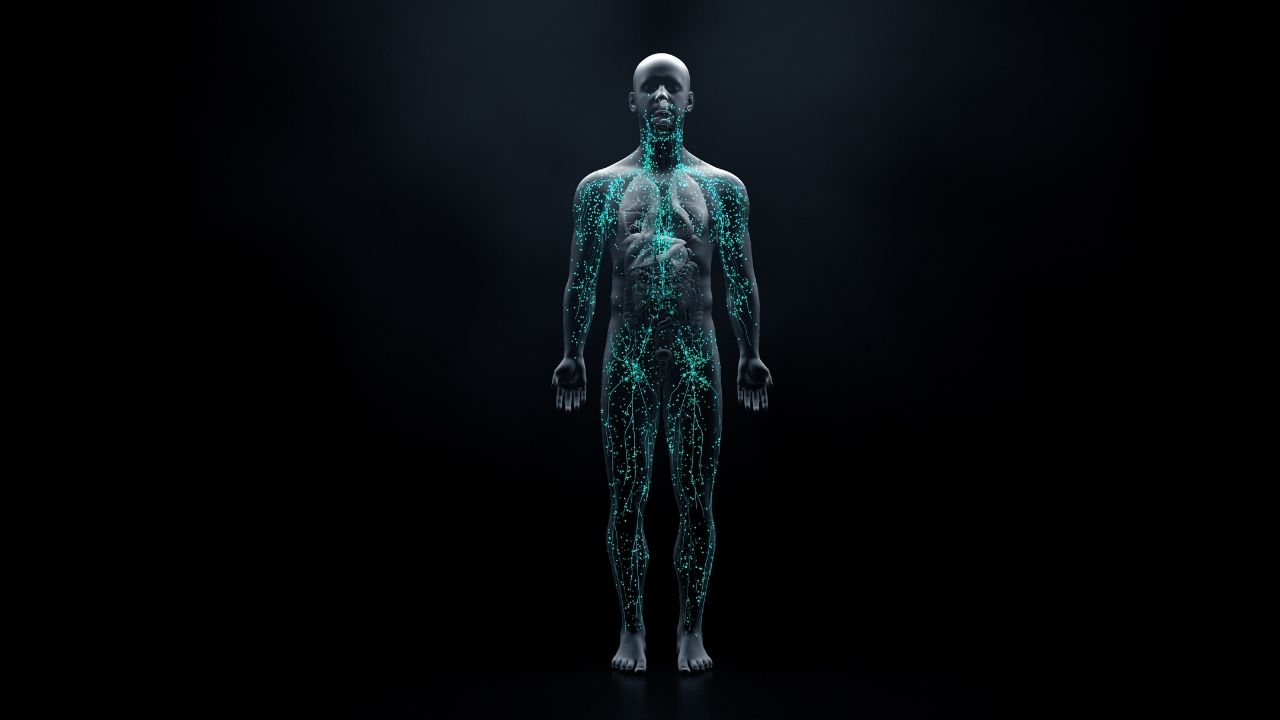
There is talk of vaccines, of medicines, but there is almost no talk of the fact that perhaps the best medicine and the way to combat the various diseases that plague us we already have with us, and it is in our immune system. It is a complex network of cells, tissues, and organs that our body uses to defend itself against all types of pathogens, such as SARS-CoV-2. The problem is that, like other parts of our body, the immune system simply ages. The years do not come alone. And with this, we are more exposed to infections, cancers, and all kinds of diseases. This is the reason why people over 65 years of age are more at risk of contracting Covid19 and developing the most virulent strain of the disease.
But it is fair to recognize that the age of the immune system does not always coincide with chronological age.
"We can have individuals who are chronologically 80 years old and have an immune system that looks like that of a 62-year-old person. Or the opposite: a 60-year-old person whose immune system looks like that of a person of a much older age," says Shai. Shen-Orr, an immunologist at the Technion Israel Institute of Technology.
But the most interesting thing is that we can mitigate aging and even reverse age, following some key indications. Before we get into this, let's look at how it works and how it deteriorates with age.

We can say that the immune system has two powerful arms: on the one hand, what is known as the innate response: the first line of defense that is activated almost immediately when it detects the presence of an unidentified organism. This is expressed in:
"Neutrophils, which mainly attack bacteria; monocytes, which help organize the immune system, warning other immune cells that there is an infection, and then there are NK (or killer cells), whose job is to fight viruses or cancer. “ "These three cells don't work as well when we get older," says Janet Lord, director of the Institute of Inflammation and Aging at the University of Birmingham in the United Kingdom.
Now, the other arm of defense is the adaptive response: it is made up of T and B lymphocytes in charge of fighting a specific pathogen. The issue is that this response takes a few days to activate. That is why sometimes fevers and illnesses can last until the lymphocytes find “the recipe” to fight the disease. But once it is activated, it will remember the pathogen for the future and fight it again, if it appears again.
"When you get older, you make fewer new lymphocytes, which are the ones you need to fight a new infection like SARS-CoV-2. And even the ones your body created in the past, to fight another infection, don't work very well either," he says. Janet Lord.
In other words: becoming old corrupts all functions of the immune system. Both the innate response and the adaptive response do not work correctly, fewer B lymphocytes are produced (which are generated in the bone marrow and are responsible for producing antibodies) and fewer T lymphocytes (which are generated in the body known as the thymus, and are dedicated to identifying and killing pathogens or infected cells). The decrease in T cells occurs because from the age of 20 our thymus begins to shrink. It's getting smaller and smaller. And when you reach 65/70 years old, only 3% of it remains in the body, Lord tells us.
The loss of cells that store information about pathogens means that when we get old we lose the ability to respond to an infection and also to the vaccines that prevent us.
“In the case of the flu vaccine, for example, 40% of adults over 65 years of age do not respond to the vaccine,” says Shen-Orr.
Another problem is that age generates more inflammation in the blood and tissues, something known in English as inflammaging (a combination of the words inflammation and aging, aging).
"In addition to not functioning optimally, immune system cells tend to cause inflammation, which leads to numerous diseases," explains Janet Lord.
All of these changes that occur as we get older "make it more difficult for us to recover from an infection or injury, and some infections can become chronic," says Encarnación Montecino, a researcher at the University of California, in USA.
And she adds:
"Infections that were under control can reappear (such as herpes zoster, or tuberculosis), susceptibility to new pathogens (flu, pneumonia) and the incidence of cancer increases"

All this is very nice, you will say, but is there a solution? It is clear that deterioration is inevitable over time, but what varies is the rate at which this will take place, where genetics and lifestyle have a great influence.
That is why it is key not to stay stuck in the chair in this now called “new normal.”
"Nowadays, sitting for a long time is for the body what smoking used to be""In studies with people who were active from a young age to old age—cyclists up to age 80 who continued to do 100 km or 150 km a week—the results were incredible. They had a lot of T cells and the thymus had not shrunken"
"In another study that monitored the number of steps per day, they found that if you do 10,000, your neutrophils look like those of a 20-year-old person. I thought that figure was an invention of people who sold devices to measure them, but when we did studio, I was totally surprised," Janet Lord tells us.
The best thing is to walk perhaps, something that anyone, no matter their age, can do. Doing something is essential. In my experience, when I was overweight, I decided to attack it by getting up at 6 in the morning and going for a run, showering with ice water, and continuing to do so for several months. It was never as effective as walking 10 kilometers a day. Walking is where I really got fit and lost weight. Not so much in strong and impact sports.
According to the work of Janet Lord, on three different drugs given to volunteers, they found that the immune age and biological age could be reversed in 2 years. Shen-Orr mentions a study on a drug he and his team are working on (not yet published) that shows signs of successful reversal.
"We saw a reduction (in the immune age), but we do not yet know if this will be maintained permanently," he tells us.
Other factors that can help in this regard are a varied diet, rich in fiber, with fermented foods and the elimination of red meat to maintain the health of the intestinal microbiota. And sleep at least 7 hours to regenerate the body through melatonin, an anti-inflammatory hormone.
And also, of course, some plants and their tinctures, or simply their teas help improve this response (keep theanine/cannabis in mind).
The article in Spanish: click here


0 Comments